
Blog posts I could write, but probably would never publish.
.
Blog posts I could write, but probably would never publish.
.
 2 Comments |
  Life in General, Marketing & Strategy, Marketing in a Nonprofit |
  Permalink
 Posted by Duane Hallock
Within any organization, you’ll find two categories of people.
First, you’ll be surrounded by a majority of co-workers who produce results.
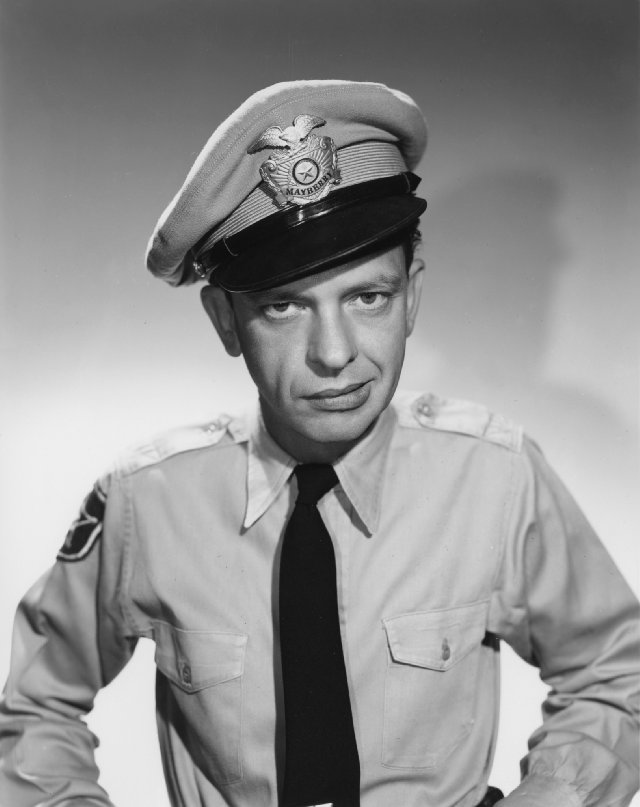 Second, you’ll encounter a minority who believe their job is to keep the first group from doing theirs. These people resemble Barney Fife, the bumbling deputy who—when given a badge—overcompensated for his latent insecurities by flaunting his authority.
In the workplace, it’s always frustrating to be around insecure individuals who demonstrate the following characteristics:
Sometimes these villains are created by systemic breakdowns. More often, though, they are self-appointed. At various times, you’ll find them in every profession and in every department, including the following:
An organization’s success requires teamwork among a diverse, collaborative workforce. Only by working with—rather than against—each other will we produce results that will have a meaningful impact upon society.
As I see it, we have two options. We can either produce results, or we can obstruct the progress of those trying to get things done.
.
6 Comments | Life in General, Life Observations, Marketing & Strategy | Permalink
Posted by Duane Hallock
The smartest, most creative people I know are those who can communicate a complex concept in simple, everyday terms. As Albert Einstein said, “If you can’t explain it simply, you don’t understand it well enough.”
Meandering, pompous words are often strung together to mask a person’s ignorance. How refreshing, though, when crisp words are used in succinct sentences to convey the depth of a person’s understanding!
You cannot have clarity without brevity. Practice subtraction. Next time you’re struggling to articulate a difficult message, try tweeting it. I love the discipline of Twitter that requires us to distill ideas into 140 characters or less.
Think about these examples where important ideas are best expressed in a simple way:
Always remember that simple and simplistic are not synonyms. Simplistic ideas represent shallow thinking. Simple ideas, on the other hand, have had the dross burned off so that only the pure, essential elements remain.
Simple is best, don’t you think?
.
1 Comment | Life in General, Marketing & Strategy | Permalink
Posted by Duane Hallock

Graduation at the annual training conference of the Advanced Public Affairs Team. (Photo credit: American Red Cross/Virginia Hart)
A couple of days ago I returned from Washington, D.C. after attending an intense, three-day training session where I already knew about half of the 150 people in attendance.
The sessions were practical and worthwhile, and I learned a lot. Equally important, though, I enriched my network of professional contacts.
Before traveling, I deliberately determined that I would network strategically by following these guidelines:
I returned from my conference gratified that my life and my career had been enriched because of the incredible people I connected (and reconnected) with.
Building a strong professional network never develops by happenstance. It requires a strategy and a plan. What’s your plan?
.
Leave a Comment » | Life in General | Permalink
Posted by Duane Hallock
I became editor of my college newspaper when student journalists notoriously clashed with university administrators.
The setting was a private, liberal arts college in Tennessee that leaned conservative, so I viewed my role as balancing things out by leaning more liberal.
Ironically, however, some of the best editorial advice I received came from the university’s president. Before I began as editor, the president asked me to meet with him in his corner office. I anticipated an awkward dance as we negotiated our working relationship. I was prepared to ask him not to control my editorial content, and furthermore, I needed him to refrain from tampering with my constitutionally-guaranteed freedoms of the press.
To my surprise, he began by acknowledging the challenges faced by student journalists. He described how, many years prior, he had served as editor of his own college’s newspaper. I never knew that about the man who, I assumed, had at birth been given the first name “Doctor.”
As we talked, my attention piqued when he leaned forward and said, “I have only one request of you. Please, get your facts straight.”
He paused as that advice sank deep into my mind, and then he continued. “I will not censor what you publish. In fact, you are free to cover any topic, as long as you get your facts straight.”
Fair enough! I left his office with a profound respect for this leader. During my tenure as editor, he and I did not agree on everything, but we always had a great working relationship. Once, as I struggled with how to cover a particularly sensitive topic, I went back to his office without an appointment. I went seeking his advice—not as a university president, but as a mentor, a friend and a former student journalist.
The years have passed, but I often think of the wise advice I once received as a brash, bold editor.
Journalism has changed dramatically since I was a college student. We now receive much of our news from blogs, tweets and updates in social media. Yet, to anyone who attempts to share information with me—no matter the medium—I have only one request:
Please, get your facts straight.
.
Leave a Comment » | Life in General, Marketing & Strategy, Social Media Strategy | Tagged: freedom of the press, journalism, student newspaper | Permalink
Posted by Duane Hallock
The best places I’ve worked have been those where people approached work in a playful, childlike manner.
Unfortunately, I’ve also worked with stuffy, adult-like colleagues who made work a drudgery. They took themselves much too seriously.They mistakenly believed that work, by its very definition, must be onerous. Inevitably, they failed to produce memorable results.
I much prefer being with the creative, fun and productive people who spend their time “working” on meaningful projects. They are the ones who are destined to leave an indelible mark on this world.
They make a difference, in part, because they think and act like children. (Note: being childlike and childish are two very separate characteristics.)
The ideal workplace is populated with people who freely exhibit the following childlike virtues:
I believe we should only hire and promote childlike people.
In fact, childlike people should never be confined just to the workplace. I always want to be surrounded by childlike family and friends whether I’m attending a social event, traveling on vacation or even attending church. Don’t forget that Jesus himself said (paraphrased), “Unless you become like a child, you will never reap life’s great rewards.
.
1 Comment | Life in General, Life Observations, Marketing & Strategy | Permalink
Posted by Duane Hallock
Let me get right to the point: If you want to be a more effective communicator, have a point!
Before you start to say something, know what you are going to say. And why. To understand why you are sharing information, first ask what you want the recipient to do once the message has been received.
Don’t you wish everyone sending you an email had a clear, concise point? Like me, you’ve probably receive countless emails containing lots of data but no relevant information. Often I will receive an email with attached spreadsheets. Believe me, in the past I’ve diligently scoured that data assuming “there must be a pony in here somewhere.” Unfortunately, I’ve never found one. So now, when I receive such an email, I will scan the first paragraph to decipher what I need to know. If the point is not clearly articulated there, I will move on to something more relevant.
After all, why waste valuable time trying to figure out the point of pointless communications?
Last week I happened to notice that I’ve been placed on the agenda for an upcoming meeting. As I write this, I’m not sure what the purpose of my brief presentation will be. Believe me, though, if I remain on the agenda I’ll make sure that my presentation has a point. To clarify the purpose of my communications, I will ask myself these three questions:
Perhaps my favorite movie quote comes from Steve Martin in Planes, Trains and Automobiles. After listening to blabbermouth John Candy talk incessantly, Steve finally explodes and says, “And by the way, when you’re telling these little stories, here’s a good idea: Have a point! It makes it so much more interesting for the listener.”
Before you communicate, do you have a point?
.
2 Comments | Life in General | Permalink
Posted by Duane Hallock
“I choose not to be a victim!” Those powerful words were shared with me last week by a friend who has had lots of bad things happen to her.
She is currently between jobs, which is why she came to my office to talk over coffee. Because I’ve known her for several years, I also know she is divorced, she’s been bullied at work and, since childhood, she has been preyed upon (and I use that term in its ugliest connotation).
Yet her bold statement—I choose not to be a victim!—got me to thinking.
Does someone really choose to be a victim? Is that a decision one actually makes? Or is a victim created as the result of something bad that happens? Or from the selfish actions of others?
In reality, bad things happen to each of us, so we all might feel victimized in some way. Yet most of us choose to pick ourselves up, or at least to allow others to help us get back on our feet.
Victims, by my definition, are those who choose not to recover. They wallow in self-pity. They feel a sense of entitlement, somehow believing that the world owes them something. Instead of finding solutions, they search for excuses. They blame others for their circumstances. They refuse to take ownership of their reality, and they harbor bitter feelings of anger, despair and revenge.
5 Comments | Life in General, Life Observations, Life's Transitions | Tagged: empowerment, revenge, victim | Permalink
Posted by Duane Hallock
Twice I have driven to Hana, an undeveloped tropical paradise on the Hawaiian island of Maui.
Truthfully, my first trip was very disappointing. The second trip, however, turned out to be a memorable and worthwhile adventure.
So what was different?
First, there were many similarities. On both trips, I was with my wife driving a rental car along the same, winding road. The scenery and the small town remained unchanged during the two years between visits. Even the weather was identical on both occasions.
So why was the second trip special?
Well, the first time we were driving hard to reach a destination. The narrow highway prohibited us from traveling as fast as I would have preferred. Even the wide spots in the road annoyed me because other drivers would pull over and walk around to enjoy the scenery. Those sightseers had no clue that they were in our way, delaying us from reaching our destination.
For those unfamiliar with the Highway to Hana, it extends more than 50 miles across the north side of Maui. The narrow, winding route contains 620 curves and passes over 59 bridges, 46 of which are only one lane wide.
Read the rest of this entry »
Leave a Comment » | Life in General, Life Observations | Permalink
Posted by Duane Hallock
This summer while on vacation, my wife and I were driving towards the Great Smoky Mountains in Tennessee. Suddenly, it dawned on me that I’d once hitchhiked along those same roads.
That realization opened a flood of long-forgotten hitchhiking memories.
I recalled the time I thumbed a series of rides to Ohio to surprise my girlfriend. Neither she nor her family were impressed that I’d traveled so far—all alone—using such an unpredictable form of transportation. (Sometimes I’m still amazed that she eventually agreed to marry me!)
Then there was the time my buddy Steve and I hitchhiked overnight to Florida. The most memorable part of that trip came after we unfolded our sleeping bags and tried to sleep in the tall grass along the shoulder of southbound Interstate 75. Believe me, it’s impossible to rest while 18-wheelers thunder by at 80 miles an hour only a few feet from your head.
And how could I forget the adventure when my brother Gary and I nearly froze in the open bed of a pickup truck? Although it was summer in Colorado, we crossed the Continental Divide after midnight in the high altitude of the Rocky Mountain National Park. Brrrr!
Back in the day, I logged around 3,000 miles by begging for rides from strangers who might take pity on a poor, long-haired college kid standing alongside the road. Granted, it was a different time and thumbing for a ride was more popular then. Besides, I was young and didn’t think much about danger, perhaps because my mom did all the worrying for me.
On various trips I met a diverse assortment of people. There was the drummer for a popular rock band. I once was picked up by an aspiring ball player who hoped to someday play for the Cincinnati Reds. And then there was the old black man who was so tired he just wanted to sleep while I drove his car across Kentucky.
With the exception of some rednecks in Southern Georgia, the people I met were very nice. For example, I remain grateful for the Orlando policeman who—after reminding me that hitchhiking was illegal—reluctantly gave me a ride to my destination.
The end of the year provides an ideal opportunity to reflect on life and the roads we’ve traveled, both literally and figuratively.
In many ways, life is like hitchhiking. We often head towards unseen destinations, traveling along roads we’ve never been on, and will likely never traverse again. Along the way, we briefly meet some incredibly interesting people, and then abruptly we go our separate ways, never to cross paths again. Yet we remain grateful for those strangers who helped us reach our destination.
During the coming year, I resolve to continue exploring new horizons, though I’ve long-since forsaken hitchhiking. I also commit to creating memories along the virtual highways I’ll travel. I will savor the relationships that develop, and I will always give thanks for the beautiful, kind-hearted people I meet along the highways of life’s meandering journey.
.
Leave a Comment » | Life in General, Life Observations, Life's Transitions | Permalink
Posted by Duane Hallock
 I communicate with passion and purpose to inspire those searching for beauty and truth.
 Duane's Dartboard