Back from Joplin!

June 12, 2011

Photos inadequately capture the vast devastation and the human suffering caused by the massive EF-5 tornado that destroyed much of Joplin.

Three weeks ago tonight an extremely powerful tornado destroyed nearly 25% of Joplin, a town of about 50,000 in southwestern Missouri.

Killing more than 150 people, the EF-5 tornado ranked as the deadliest to hit the United States in more than 60 years. Listed as the seventh deadliest tornado in U.S. history, it was also the 26th deadliest in world history. During the 20 minutes the tornado was on the ground in Joplin, 2,000 buildings were destroyed along the 13-mile trail of indescribable destruction.

I learned about the monster tornado from breaking news on TV and within minutes my phone started to ring. As media contact for the American Red Cross in Kansas City, I began fielding questions about the relief efforts already underway. That evening I was on the TV news, and by 5 a.m. the next day I was being interviewed live on TV in the Red Cross parking lot even before I stepped into my office. Read the rest of this entry »


An Excellent Definition of Strategy

May 17, 2011

In the rush of life’s frenetic pace, I occasionally overlook moments of significance. Those fleeting times are sometimes ignored because of my inattention, or perhaps because I find it easy to overlook things that appear fairly simple.

Recently, I almost rushed past the wisdom shared by one of the most brilliant strategic thinkers I know. I had the privilege of spending an hour in the office of my friend David Westbrook, senior vice president of strategy and innovation at Children’s Mercy Hospital here in Kansas City. He was helping me to brainstorm contingency plans for a major business change looming on the horizon.

In the course of our conversation, he softly said, “You know, strategy is knowing where you are going and knowing how you’ll get there.”

He then moved, but not before I jotted down what he said. In fact, during our time together I took several pages of notes and my only frustration was that David’s mind moved faster than did my expensive fountain pen.

Several days later that simple yet profound statement kept echoing in my mind. I’ve read many books, articles and blogs about corporate strategy. I’ve attended workshops and even participated in roundtable discussions on the topic. Yet I’ve never heard strategy defined in such a simple, elegant way.

For the benefit of anyone wanting to be more strategic, allow me to repeat David’s gem of wisdom:

Strategy is knowing where you are going and knowing how you’ll get there.

Reflect on the relevance of that sentence and ask, “Do I know where I’m going? Do I know how I’ll get there?”

Tactics can wait. First, however, make sure your strategy is clear.


Six Traits of People I Like Working With

May 13, 2011

Any success I might claim as a marketing and communications professional would necessarily include a lengthy and sincere list of acknowledgements. The English poet John Donne observed, “No man is an island.” In other words, we are all interdependent. Other people always contribute to our success.

In my work, I am most productive when I am surrounded by people who are:

  1. Grateful. They are glad to be alive and they find things to be thankful for. With an abundance mindset, they focus on what they have rather than obsessing on their deficits.
  2. Strategic. They think before they act. Before succumbing to the gravitational pull of tactics, they think things through in a purposeful way. They wrestle with questions that begin with the word why?
  3. Competent. Once they see the big picture and understand why something is important, they know what to do and how to do it.
  4. Curious. Curiosity never killed anyone. I love interacting with those who think with a beginner’s mind. They are the antithesis of so-called experts who already know the right (and only) way to do something.
  5. Creative. With a curious mind, creative people look at things differently. They see patterns that others miss. They are able to juxtapose existing ideas in a way that creates something new.
  6. Innovative. The Harvard professor Theodore Levitt put it this way:  “Creativity thinks up new things.  Innovation does new things. There is really no shortage of creativity or of creative people in business.  The shortage is of innovators.  The major problem is that so called “creative” people often pass on to others the responsibility for getting down to brass tacks.  They have plenty of ideas but little business-like follow-through.  They themselves are the bottleneck.  They make none of the right kind of effort to help their ideas get a hearing and a try.”

On the other hand…

Occasionally I encounter individuals who drain my energy and erode my effectiveness. They are:

  1. Victims. When something goes wrong, it’s never their fault. Someone else is to blame. They’ve had bad luck and were the unfortunate victims of circumstances. They feel powerless, living their lives in a reactive rather than a proactive mode.
  2. Dinosaurs. They remember the good old days when things were much better. (I really think they just have very selective memories.) The world changes too fast to accommodate those who cling to the status quo, refusing to adapt to the climate changes.
  3. Devil’s Advocates. They don’t move conversations forward, though they try to appear intelligent with their searing questions. They hinder progress. They are usually part of the problem, not the solution.
So, that’s my list. What’s on yours?

The Practice of Gratitude

April 16, 2011

This week I returned to the campus where I once taught marketing. I was a guest of the Nonprofit Leadership Student Association at Rockhurst University, the well-respected Jesuit school here in Kansas City. Nearly 100 of us gathered for lunch to recognize some very exceptional students preparing for careers of service.

Years from now, long after I’ve forgotten what we ate, what we talked about at our table or what the weather was like, I will remember one thing:  the after-lunch remarks delivered by Rev. Charles Shelton, a Jesuit priest, psychologist and author of a new book on gratitude.

Dr. Shelton told how living a life of gratitude can improve virtually every aspect of a person’s life. Truthfully, I’d already heard much of that elsewhere. The biggest take-away for me, however, was something so simple I almost missed it. Dr. Shelton pointed out that gratitude is something we chose. Being grateful does not come naturally; it’s something that requires work. We must make the decision to be grateful, and we must set aside specific times to cultivate a grateful spirit.

In this noisy world, we are bombarded with advertisements reminding us of what we do not have. Purchasing certain products, we are told, will help to satisfy voids in our lives. Imagine how we would see the world differently if we were more aware of what we already have, and not obsessed with what might be lacking.

In our careers, we often strive to reach for things beyond our reach. The grass always looks greener somewhere else. Imagine how satisfying a job would be if we were more thankful for the abundance that already surrounds us.

In our prayers to God, we undoubtedly spend most of our time asking for things we do not have rather than expressing gratitude for the blessings we have already received.

I’m grateful to have heard Dr. Shelton speak. I resolve to spend time each day reflecting on the countless things for which I am grateful. In these uncertain times, a spirit of gratitude will provide a much-needed ballast in the stormy seas ahead.

What are you thankful for?


10 Reasons NOT to Launch a Marketing Campaign

March 29, 2011

Sometimes marketing is viewed as a magical elixir that will somehow cure whatever ails you.

In my 20-plus years of marketing experience, I’ve come to realize that good marketing is based more upon common sense than upon creativity. Though marketing can work wonders, it is not a panacea that will transform failure into success.

As much as I value good marketing, I believe there are times not to launch a marketing campaign. My advice is to delay any marketing activities when:

  1. We are unclear what success will actually look like. Without clearly defined goals, we are merely groping in the dark, hoping to grasp something—anything—of value.
  2. We feel compelled to act before we think. In our fast-paced world, we will always experience the strong gravitational pull of urgency. Focusing on what is urgent, though, will often entice us to overlook strategy and jump prematurely into tactics.
  3. We want to begin with communications. A good marketing process ends with communications but that’s never a good place to begin.
  4. We focus on obstacles rather than opportunities. Though we must always understand reality, we will never leave the starting blocks if we focus on the hurdles between us and the finish line.
  5. We have no champion for the product or service. We may all agree that a particular program is important, but unless someone with passion assumes ownership of the program’s success, it will flounder. Of course, marketers will be the easy targets of those who need to blame someone for a product’s failure.
  6. We believe everything will be okay if only we can “get the word out.” I cannot be more emphatic in stating this: raising awareness is not a marketing goal.
  7. We talk more than we listen. Marketing success on a 2.0 world is all about having conversations, not trying to speak louder.
  8. We are unable to profile a target audience. Only the naive believe there really is such a thing as the “general public.” We are headed towards marketing failure if we neglect to define a primary audience. After all, to target everyone is to hit no one.
  9. We ignore the concept of marketing exchanges. Marketing is based upon the premise that we must build win-win relationships where we exchange value for value. Marketing is never a one-way transaction.
  10. We cannot differentiate our product or service. If we don’t know who our competitors are, and if we cannot articulate how we are different and better, then my advice is simple:  Turn off the lights, lock the door and go home. The party is over.

Helping People Help

March 19, 2011

During a disaster, people respond to human suffering by wanting to help. They want to do something. If possible, they want to provide some form of tangible support.

This week I received an e-mail from a high school girl wanting my help in organizing a collection of bottled water that could be shipped to the people in Japan affected by the earthquake and tsunami. Many people also called or e-mailed our offices with similar requests.

Some organizations rally public support and garner media attention by organizing collections of water, canned goods or clothes. People who participate feel good about themselves and what they’ve done. They don’t realize that their efforts are not always the best way to help the people they want to help.

It may sound mercenary, but I usually tell people that the best way to help is through financial support. I’ll admit it felt a little cold when I read my own quote in this morning’s newspaper. Yesterday I was talking with a reporter about how much the American Red Cross has raised for the people in Japan, and he wrote:

Duane Hallock, director of marketing and communications for the group’s Kansas City chapter, said the Red Cross was focusing on financial support for the Japanese Red Cross.

To me, that felt cold because it eliminated the human element. In reality, the Red Cross is focused on helping the suffering people who will benefit from the financial support of generous and compassionate Americans.

I was pleased to continue reading, though, and see that my colleague at the Salvation Army explained that they also prefer support through financial donations because of the prohibitive cost of shipping goods as far as Japan.

In our 130 years of experience in providing disaster relief, we at the American Red Cross have learned a few things. We are not being greedy when when we say that financial support is often the best way to help. We have learned that when supplies need to be purchased, it’s usually best to buy them as close to the disaster operations as possible. Not only does that speed up the delivery, it also reduces the costs of shipping.

As a disaster unfolds, the needs of those affected can change quickly. It would be unfortunate, for example, to collect bottled water for people who needed medicine or other specific supplies. Financial support provides agility for the responding organization to better meet the immediate and changing needs.

In a disaster, the economy of the region will likely be hit hard. Sometimes purchasing needed supplies nearby can indirectly help to boost the economy of those affected by the disaster.

In my job with the American Red Cross, I see the outpouring of love and support from my neighbors and friends. I am truly touched by their compassion and generosity. As a good steward of donor dollars, though, I feel obligated to direct them to the channels where their desire to help can have the greatest benefit and where they can do the most good.

So let me close with a message I’ve shared many times during the past week:  You can help the people in Japan by going to redcross.org. You can also make a $10 contribution by texting REDCROSS to 90999.

On behalf of the people you will help, let me say, “Thank you!


Things I’ll Look for When Selecting the Next Member of My Marketing Team

March 1, 2011

Hypothetically, let’s assume I’m looking to hire a new member of my marketing team. In reality, my public relations manager will be leaving in a couple of weeks, so I actually am making plans on how I’ll fill the void created by her departure.

Wait, though, before faxing me your resume. (Do people still do that? I hope not.) I have been asked to delay recruiting until the expense budget comes into better focus. The hiring process is frozen, but while we await the spring thaw, let’s return to my hypothetical situation.

As I think about the importance of building a strong marketing team, I have already updated the job description. The social media revolution mandates new expectations that are reflected in several bullet points on the revised list of job duties. Of course, I’ll also be looking for someone who meets a minimum threshold of necessary skills, talents and experience.

Above and beyond that, though, I will almost certainly select someone who:

  1. Has an impressive digital footprint. Before calling someone in for an interview, you can bet I will Google his or her name. There are so many people looking for jobs that I cannot imagine interviewing someone who does not have an impressive amount of information readily available on LinkedIn, Facebook, Twitter, YouTube, a personal blog, an online portfolio, or some other searchable platform.
  2. Is well branded. I want to know what a person stands for, both personally and professionally. A good brand makes promises and I need to have some idea of what I can expect from anyone who expresses an interest in being part of my team.
  3. Is differentiated. Does this person stand out from the rest of the pack? Quite frankly, I won’t even notice someone who blends into the vast, beige-colored landscape populated by thousands of job seekers whose clichè-ridden resumes were shaped by the same cookie cutter. (See my previous blog post about using Facebook as a tool to differentiate yourself in a job search.)
  4. Is savvy with traditional media. The ideal person will have a good understanding of traditional media—TV, radio and newspapers. He or she will also have experience in proactively pitching good story ideas and in building strong relationships with people inside the news media.
  5. Is savvy with social media. The right person will have moved far beyond the initial process of setting up profiles on various social media platforms. He or she will have demonstrated an ability to a) listen using social media tools, b) have sustained conversations in social media and c) create content valued by others who are swimming in the deeper end of the social media pool.

Three years ago when I most recently hired someone, the criteria were somewhat different. At that time I relied heavily upon two lists. One described my expectations for individual responsibility and the other focused on team performance. Though I’ve added criteria, both lists are still relevant today. So, here’s my question:

If, hypothetically, you are looking for a marketing job, how would you measure up?


Start with WHY, then move to WHAT and HOW

February 22, 2011

This afternoon I had the opportunity to speak to 200 social media enthusiasts who were concluding an all-day conference on the role of social media during times of disaster.

I talked briefly about a future that will be driven more by strategy and less by the actual tools and technology. We must begin with why, not what or how.

Sometimes we find ourselves focusing on gadgets, widgets, tools and technology. Too many of us know how to tweet without knowing why we tweet. Too many of our agencies or organizations create Facebook pages without having a clearly defined purpose. Too often we assume that because we can, we must.

My desire for each of us is that we become more active in social media, but only in a purposeful way. We must avoid the temptation to join the parade just because everyone else is doing it. My hope is that we begin with strategy and then move to tactics, that we ask before we act, and that we think before we do.

May our mantra be:  Strategy first. Tactics second. Results always.


Being Organized in the New Era of Google

February 8, 2011

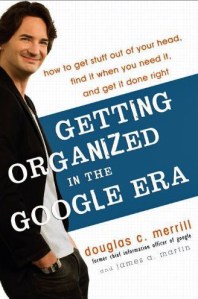
Seldom do I read every page of a book, but I just devoured every page of Getting Organized in the Google Era, an excellent book written by Douglas C. Merrill, the former chief information officer of Google.

Don’t be put off by its title—it’s not as nerdy as it sounds. My advice: Do yourself a huge favor and read this if you are still old-fashioned enough to:

  1. Use Microsoft Outlook to send and receive e-mail.
  2. Keep your appointments in an Outlook calendar.
  3. Store most of your important documents on the hard drive of your computer.
  4. Fear using “the cloud” for e-mail, calendar and document storage.
  5. Have no clue what is meant by the term “in the cloud.”

The very next book you should read. Trust me!

I don’t mean to be melodramatic or condescending, but I strongly believe we are veering towards obsolescence if we are still anchored to Outlook or to a Franklin-Covey planner for either our personal or work calendars. I also think we are seriously outmoded if we believe that the best way to organize our e-mails is to drag them from our inboxes into a hierarchy of folders and subfolders. In our globally-connected world, I can’t imagine anyone being unable to access his or her calendar, e-mail or documents from a smartphone or a computer.

To change ingrained habits we must start thinking differently. This exceptionally insightful book will help to change the way we think about the world. Just so you’ll know, this is not merely a book adulating the wonders of Google. Rather, the author describes ways to handle the blurring of our personal & professional lives. He talks about letting strategy drive our day-to-day decisions around tactics. He provides useful tips for customizing any organizational system to fit our personal needs, readily admitting that one size does not fit all.

To tease you into buying the book today, allow me to share these brief excerpts:

  1. In an era of widespread, inexpensive communications, knowledge simply spreads too rapidly for it to hold power for long. So there’s no point in trying to cram a ton of it into your head. A much better strategy is to have a system for storing and organizing knowledge so you can access or recall it when you need it.
  2. Because of search, you no longer have to neatly organize all your information the way you would with physical files, with a place for everything and everything in its place. Search is the foundation of the organizational systems we need today.
  3. The best e-mail system is the one that lets me quickly sort and search through years of messages. It’s accessible from any computer or any Internet-connect phone. It’s the one that’s easiest to use and has a huge amount of free storage, so I never have to delete old messages to make room for new ones. It excels at filtering out spam. That’s Gmail.

Your next steps are:  a) buy and read the book, b) underline key points and c) let me know what you think.


Rebecca Blackburn – Finding My Career Purpose

February 2, 2011

Rebecca Blackburn

In the past few months I’ve spent a lot of time dwelling on the purpose behind my career. I want to excel as a marketing communicator and serve a company to the best of my ability, but I have realized I also want to do more than that.

Yesterday morning I noticed the sun shining in the windows of our home. I soon realized the reason it seemed so beautiful was because it has been a long time since we’ve had a day filled with sunshine in Kansas City. That simple sunlight beaming in my window brought a smile to my face and joy to my heart – I feel like this is an illustration of what I want to do in my career.

Read the rest of this entry »